Build a plan you can use
Use the plan to choose where the business will focus and show how that choice can work. The customer, offer, sales approach, delivery capacity and money assumptions need to describe the same business. Finish with the work that happens next and what would make you change course.
Decide what this plan is for
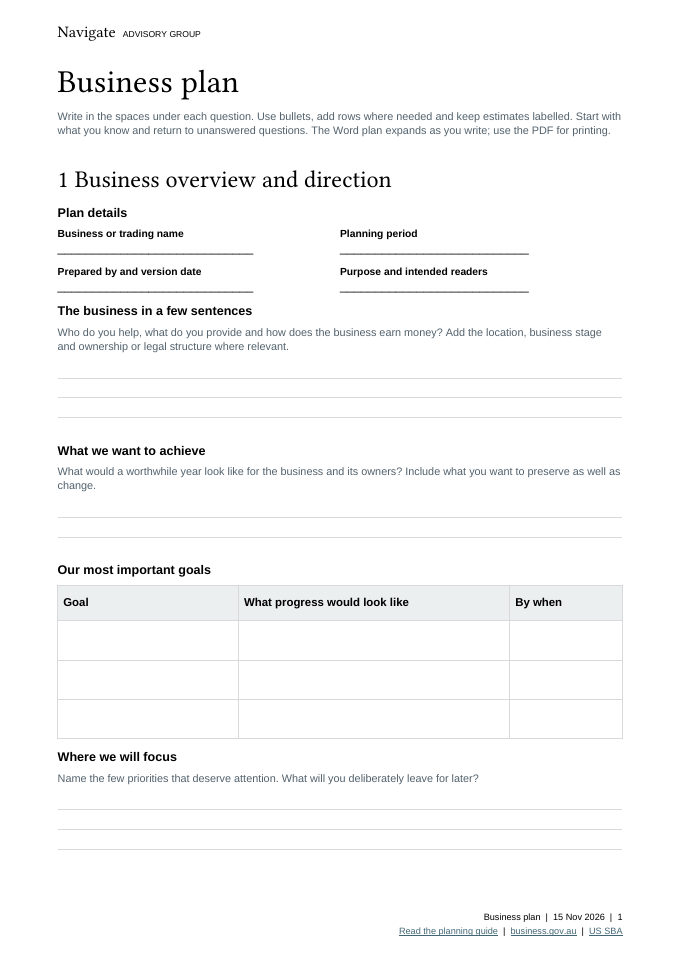
Name the decision, the planning period and who will use the result before filling in the detail. An owner and team may need a practical operating plan. A lender or investor may require financial statements, funding information and their own format. This template is a starting point for that work, not a complete finance submission.
Start with what you know. Keep actual records, estimates and unanswered questions distinct. Return to the overview after the choices and numbers are clearer; the summary should reflect the plan you can support.
Fictional planning excerpt
When a clearer customer need changes the plan
A repair business is considering a defined site review for operators with several commercial kitchens. Its initial question is whether it could sell a recurring offer.
What the customer questions reveal
In the fictional case, the operations manager asks who should act on the items in a report. Another customer expects repairs to be included. Those questions reveal two different gaps: the output must help people take responsibility, and the scope must make the paid work clear.
What changes in the plan
The proposed offer becomes a defined site review, a written action list and a conversation about priorities. Each item needs an owner and next step. Repairs are quoted separately. A recurring offer remains a separate question rather than an assumed commitment.
- Customers and offer
- Distinguish the operations manager coordinating the work, the site teams using the list and the owner approving spending. Explain the result each needs to understand.
- Sales and delivery
- Show an example action list before promising the work. Plan for preparation, records, site access and the conversation explaining responsibility; agree specialist contributions where needed.
- Money and capacity
- Include preparation, technician time, travel and follow-through in the cost and capacity check. The canvas does not establish a price, an order or the payment timetable.
- Next work and review
- Ask the operations manager to use an example to identify who acts next. Separately record the effort to produce and explain it. Revise the offer and delivery assumptions using what those checks reveal.
The customer question changes the work, not only its description. A useful plan carries that change through the offer, delivery, resources and next action. Leave unsupported amounts and commitments open until they can be checked.
A limited worked decision from the existing fictional maintenance-business example. It is not a complete business plan, a financial forecast or a current Navigate client result.
Read the connected Business Model Canvas exampleCheck whether the parts agree
- Customer and offer
- Does the work solve a specific need, and why might this customer choose an alternative? Check the answer against conversations, purchases or other relevant evidence.
- Sales and delivery
- Can the team fulfil the volume, timing and service in the sales assumptions? Include the preparation and follow-through as well as the visible customer work.
- Profit and cash
- Do the budget and payment timetable use the same period and assumptions? Identify commitments that need cash before receipts arrive; a profitable plan can still have a funding gap.
- Priorities and responsibility
- Does the next-action list address the important gap, with an agreed owner, date and resources? Choose the work that changes the decision rather than filling every available row.
Keep the plan useful
Review the first version with the people who will carry out or use the work. You should be able to explain the chosen focus, the main assumptions behind the numbers, the practical limit and the first useful check. An important unanswered question belongs in the plan, not behind confident prose.
Revise affected parts together. Lower demand may change activity and capacity; slower payments may change funding even if the profit estimate is unchanged. Keep the earlier version and record what changed, why and which evidence now supports it.